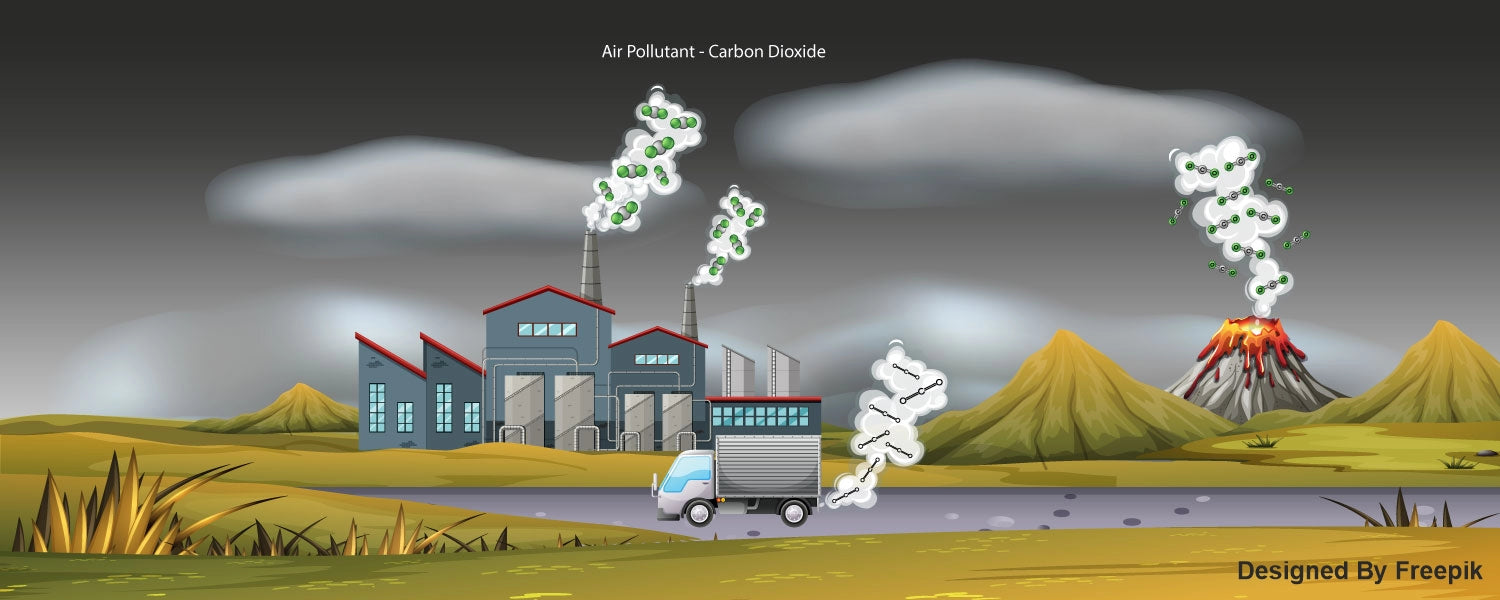

Air pollution in India is no longer a seasonal inconvenience. It has become a year-round public health emergency, quietly affecting millions of people across cities, age groups, and income levels.
According to the World Health Organization’s Global Air Quality Guidelines (2021), the recommended annual PM2.5 level is 5 µg/m³ — a number that feels almost aspirational when compared to real-world conditions in most Indian cities.
India’s own National Ambient Air Quality Standards (NAAQS) permit an annual PM2.5 limit of 40 µg/m³ and a 24-hour limit of 60 µg/m³. Yet, even these thresholds are crossed for large parts of the year.
Cities such as Delhi, Mumbai, Kolkata, Bengaluru, and Lucknow routinely record winter PM2.5 levels between 200–300 µg/m³ — many times higher than both national and global guidelines.
What this means
Short-term PM2.5 exposure across 10 major Indian cities is associated with an estimated 33,000 premature deaths every year. Long-term exposure significantly increases the risk of chronic respiratory and cardiovascular diseases.
These are not abstract statistics. They shape how we breathe, move, work, and live.
The next question, then, is unavoidable: what drives these numbers — and what can we do today?
Understanding the Air Quality Index (AQI)
Most of us check the AQI only when our eyes burn or our throats feel scratchy. But AQI is more than a warning signal — it’s a tool for daily decision-making.
The Air Quality Index (AQI) reflects the concentration of six key air pollutants:
· PM2.5
· PM10
· NO₂
· SO₂
· CO
· O₃
AQI Categories and Health Impact
0–50 | Good
Minimal impact
51–100 | Satisfactory
Minor breathing discomfort to sensitive people
101–200 | Moderate
Breathing discomfort to people with lung, asthma, and heart conditions
201–300 | Poor
Breathing discomfort to most people on prolonged exposure
301–400 | Very Poor
Respiratory illness on prolonged exposure
401–500 | Severe
Affects healthy people and seriously impacts those with existing diseases
How to use AQI wisely
AQI readings come from fixed monitoring stations. While they provide reliable city-level trends, local variations can occur. Despite this limitation, AQI remains the most accessible indicator for planning outdoor activities and adjusting daily behaviour.
Key Pollutants and Their Impacts
Not all air pollution is visible — and not all of it comes from the same source.
PM2.5 and PM10
Fine particulate matter released from vehicles (especially diesel), industrial activity, coal-based power generation, construction sites, road dust, biomass burning, and household cooking using solid fuels.
Nitrogen Oxides (NOx)
Emitted mainly from vehicles and power plants; these gases contribute to ground-level ozone formation and secondary particulate matter.
Sulphur Dioxide (SO₂)
Produced by burning sulphur-containing coal and fuels; it forms sulphate particles and contributes to acid rain.
Ozone (O₃)
A secondary pollutant formed when sunlight reacts with nitrogen oxides and volatile organic compounds.
Volatile Organic Compounds (VOCs)
Released from fuels, solvents, and various industrial processes.
Main Sources of Air Pollution in Indian Cities
Air pollution in cities is rarely caused by a single source. It is the result of overlapping everyday activities.
Transportation
Personal vehicles, freight movement, and commercial fleets are major contributors to PM2.5 and NOx. In many metropolitan areas, transport accounts for 30–40% of PM2.5 emissions.
Residential and Seasonal Burning
Stubble burning, biomass use, and firewood combustion significantly worsen air quality, particularly during winter months.
Construction Dust
Uncovered materials, unpaved sites, and roadwork generate large quantities of coarse particulate matter.
Road Dust and Infrastructure
Broken roads, potholes, and accumulated debris contribute to re-suspended PM10 and PM2.5.
Tyre and Brake Wear
A less visible but growing source of fine particulates and microplastics in urban air.
Real-World Questions People Ask
If we close windows to block polluted air, will it cause suffocation?
Closing windows helps reduce the entry of outdoor pollutants. However, it can also lead to increased indoor carbon dioxide (CO₂) levels.
A balanced approach works best:
· Keep windows closed during peak pollution hours
· Ventilate indoor spaces when AQI levels improve
· Use CO₂ monitoring as a proxy for adequate ventilation
Practical Personal and Community Actions
Reduce Your Emissions
Small choices, repeated daily, add up.
· Avoid single-occupancy car trips; use public transport whenever possible
· Switch off engines while idling at traffic signals
· Maintain vehicles regularly — PUC compliance, clean air filters, and correct tyre pressure matter
· Segregate your waste
Community and Workplace Actions
· Report open construction sites and dusty areas through municipal apps or local helplines
· Ask workplaces about greener fleet options and EV transitions
· Investors and procurement teams can demand cleaner operations and responsible vendor practices
Bringing It All Together
India’s air pollution challenge is severe and undeniable. Large-scale policy and infrastructure reforms are essential — but they take time.
In the meantime, individual and community actions remain powerful. Reducing emissions, making informed daily choices, supporting cleaner technologies, and holding institutions accountable can collectively shift the needle.
The question is no longer whether air pollution is harming us.
It’s how quickly we choose to act — for ourselves and for future generations.